Breville Barista Express Review: Is It Still Worth It in 2026?
The best-selling all-in-one espresso machine is over a decade old as a design. A research-backed look at how it ages, what owners report breaking at 1-3 years, and who should still buy one.
Some links below are affiliate links. If you buy through them, BrewTested may earn a small commission at no extra cost to you. We only recommend gear that passes our Fit Analysis, and we publish the ones that don't.
Still worth it in 2026? Yes, for a specific buyer: the person who wants one purchase, one box, and a complete espresso-and-milk workflow at $549-600 street, and who is honest with themselves that they may never want to tinker beyond it. No other single product gets a beginner from zero to a genuine latte for less friction.
Not worth it if: you already suspect espresso will become a hobby. The built-in grinder is the component owners consistently outgrow and report trouble with first, and it cannot be upgraded separately. A Bambino plus a standalone grinder costs about the same and leaves every future upgrade path open.
Honesty first: BrewTested has not yet completed hands-on testing of this machine. This review synthesizes Breville's published specifications, years of owner reporting across r/espresso, Home-Barista, and owner forums, and documented community consensus. We are putting our money where our mouth is: we are starting a live ownership log on this exact machine, with dated updates as it ages. Details at the end.

What the Barista Express is
The Breville Barista Express (BES870XL) is a semi-automatic espresso machine with a built-in conical burr grinder: beans go in the hopper on top, the grinder doses directly into the 54mm portafilter, and a thermocoil heating system with PID control brews at a regulated temperature while a gauge shows extraction pressure. A manual steam wand handles milk. Published specs: 1600 watts, a 67 oz water tank, a 15 bar Italian pump with 9 bar extraction, and 16 grind settings.
It has been in continuous production in essentially the same form since 2013, which cuts both ways. On one hand, the design is dated: no shot timer on the display, dose adjustment lives behind a combination of grind amount dial and button presses, and newer stablemates (Barista Pro, Barista Touch, the Impress line) have faster heating systems and better interfaces. On the other hand, a machine sold in these volumes for this long is one of the most documented consumer espresso machines ever. Every failure mode, every quirk, every fix has an owner thread. That documentation is a genuine ownership asset, and this review leans on it.
Who it is for (and why it keeps selling)
The Barista Express solves the problem most first-time buyers actually have, which is not 'which machine has the best thermal stability.' It is 'I want to make real lattes at home without researching five product categories.'
One purchase covers machine, grinder, tamper, pitcher, and baskets. The pressure gauge gives beginners the feedback loop that teaches dialing in: needle too low means grind finer, needle pegged means grind coarser. Community consensus, even among people who eventually upgraded away from it, is that the Barista Express is a good teacher. A very large share of today's enthusiast crowd started on one.
It is also, dollar for dollar, hard to attack at street price. At $549-600 it costs about the same as a Bambino plus an entry grinder, and it includes PID temperature control and a more complete accessory kit than either. The full three-way tradeoff is in our Bambino vs Gaggia Classic Pro vs Barista Express comparison.
Barista Express at a glance (manufacturer-published, mid-2026)
| Spec | Barista Express BES870XL |
|---|---|
| List price | $699.95 on Breville's site as of mid-2026 |
| Typical street price | $549-600 (Breville's own site showed $549.95 at the time of writing; sale prices vary) |
| Heating | Thermocoil, PID-controlled, 200F published brew target |
| Power | 1600W |
| Pump | 15 bar Italian pump, 9 bar published extraction |
| Grinder | Integrated conical burr, 16 grind settings, half-pound hopper |
| Portafilter | 54mm stainless, single/double wall baskets included |
| Water tank | 67 oz |
| Dimensions | 12.5 x 13.8 x 15.9 in as listed by Breville |
How it ages: what owners report at 1-3 years
This is the section most reviews skip, because most reviews are written in week two. Synthesizing multi-year owner threads, a consistent aging picture emerges. None of this is universal, and plenty of machines run for many years trouble-free, but these are the patterns that recur:
The grinder is the most common complaint, and it compounds. Owner threads describe the integrated grinder as the first thing to disappoint: inconsistent grinds that make dialing in harder than it should be, jams and clogging (especially with oily dark roasts), and drifting grind behavior over time. Posts titled some variation of 'grind size struggle' and 'grinder jammed' appear on r/espresso continuously. Regular cleaning of the burrs and chute helps; it does not change the underlying ceiling.
Steam wand issues cluster around neglect. Milk residue clogs the tip and, over time, degrades steam performance; 'steam wand not working' is one of the most-searched Breville problems. The o-rings and seals in the wand assembly are wear items. Most reported cases trace back to inconsistent purging and wiping rather than a design defect, but the machine is not forgiving of lazy milk hygiene.
The steam ring and group gasket are consumables. The silicone gasket the portafilter locks against hardens and compresses with heat cycles. Owners commonly report needing a replacement somewhere in the first couple of years of daily use; symptoms are leaking or sputtering around the portafilter during shots. It is a cheap part and a genuinely easy DIY fix.
Solenoid valve and pressure problems appear in the out-of-warranty window. A subset of longer-term owners report no-pressure or low-pressure states traced to the three-way solenoid valve or to scale buildup, particularly in hard-water areas with irregular descaling. Repair is possible (parts exist, and repair shops know this machine well) but this is the failure class that most often turns into a replace-vs-repair decision.
Scale is the silent multiplier. A large fraction of reported failures correlate with hard water and skipped descaling. Breville's maintenance lights help, but owner experience suggests treating water quality as part of the machine's cost.
We keep a living, linkable rundown of these failure modes and their fixes in our Barista Express problems and solutions guide.
Street price behavior: never pay list
The Barista Express may be the single most predictable sale item in home espresso. As of mid-2026, Breville's own site lists it at $699.95 and was selling it at $549.95 at the time of writing, and major retailers have repeatedly matched the $549-600 band throughout the year. Deal-tracking communities have logged $549.95 at Amazon in recent months, and the machine reliably dips during the big retail moments: Black Friday and Cyber Monday, Prime Day, and the Mother's Day and Father's Day gifting windows.
Practical guidance: treat roughly $550 as the real price and anything at or under it as a normal, recurring event rather than a rare score. Paying full list means you were a few weeks impatient. Certified-remanufactured units from Breville's own outlet also appear at meaningful discounts with warranty, a reasonable option for a machine this well understood. Sale prices vary; check current listings before buying.
What you outgrow first, and the upgrade paths
Owner consensus is remarkably uniform on the sequence: you outgrow the grinder first, then the steam power, and the espresso side last.
The grinder ceiling shows up as a dialing-in wall: you can get good shots, but repeatability from day to day is a fight, and light roasts expose the inconsistency most. Because the grinder is integrated, you cannot swap it. That leaves three real paths, all well-trodden in the community:
- Add a standalone grinder anyway and keep the Barista Express as machine-only. Common and rational: a DF54-class or better grinder feeding the Barista Express's brew path noticeably improves consistency, and the built-in grinder becomes a decaf or backup lane. The aesthetic redundancy bothers some people; the results do not.
- Sell and split. The Barista Express holds resale value unusually well because demand never stops. Selling and putting the proceeds toward a separates setup (machine plus grinder chosen independently) is the cleanest exit and the one most upgraders take.
- Climb the Breville ladder. The Barista Pro adds a faster heating system and a real interface; the Impress line adds assisted dosing and tamping. These fix interface-era complaints but keep you in integrated-appliance land.
If your shots taste off before any of that hardware talk, start cheaper: technique and beans move the cup more than gear at this level. Our sour vs bitter diagnosis guide is the first stop.
Verdict: The Barista Express in 2026 is a dated design that is still, at street price, the most frictionless single purchase in home espresso, and the owner community around it is an asset no new machine can match. Buy it if you want an appliance that makes lattes. Skip it if you already know you want a hobby; the integrated grinder you cannot upgrade is the wall you will eventually hit, usually somewhere in years one to three.
The BrewTested Ownership Log starts now
Everything above is research: manufacturer specs and the synthesized experience of thousands of owners. It is honest, but it is not the same as living with the machine, and we think review sites should be clear about that line.
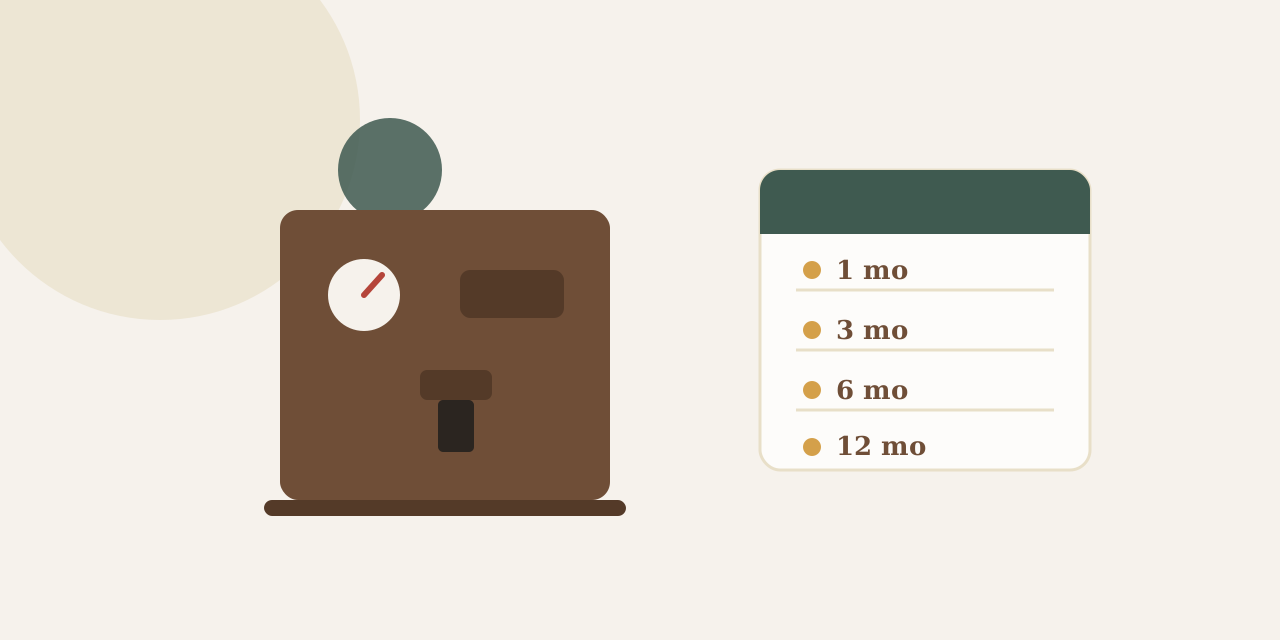
So we are putting one on the counter. BrewTested is starting a live ownership log on this exact machine, a Barista Express bought at street price like anyone else would, used daily, maintained per the manual, with dated entries at 1, 3, 6, and 12 months covering grinder consistency over time, steam performance, gasket and seal wear, and every maintenance task and cost as it happens. No entries exist yet; the log begins with the machine's first shot, and this page will link every update as it publishes.
Until then, how we test explains the standards the log will follow, and our problems and solutions guide tracks the community's collective experience that this log will test against.
Breville Barista Express: FAQ
Is the Breville Barista Express still worth it in 2026?
At its $549-600 street price, yes, for buyers who want a complete one-box espresso and milk setup with minimal research. It remains the lowest-friction entry into real espresso. It is a weaker buy at full list price, and a poor fit for buyers who already know they will want to upgrade components, because the integrated grinder cannot be swapped.
How long does a Breville Barista Express last?
Owner reports commonly describe 5+ years of service with regular cleaning, descaling, and gasket replacement, while neglected machines (especially in hard-water areas) surface pressure and solenoid problems sooner. Treat the group gasket and steam wand seals as consumables, use decent water, and the machine's lifespan is respectable for its class. We will be documenting this firsthand in our ownership log.
Why is my Barista Express not building pressure?
The most-reported culprits, roughly in order: grind too coarse or dose too low (a dialing-in issue, not a fault), a clogged or worn group gasket, scale buildup restricting flow, and, in older machines, the three-way solenoid valve. Our Barista Express problems guide walks the diagnostic order before you pay for a repair.
Is the Barista Express grinder good enough for espresso?
Good enough to learn on and to pull satisfying shots, particularly with medium and dark roasts. Community consensus rates it as the package's weakest component: less consistent than standalone grinders in its price class, prone to clogging with oily beans, and the part owners outgrow first. It cannot be upgraded separately, which is the machine's defining limitation.
What should I upgrade first from a Barista Express?
A standalone grinder, almost unanimously per owner consensus. Feeding the Barista Express from a better grinder improves shot consistency more than replacing the machine would. After that, the common paths are selling it toward a separates setup or moving up Breville's line for faster heating and better interfaces. Technique and fresh beans, though, beat all hardware upgrades at this level.