Best Espresso Machines Under $500 (Mid-2026)
Under $500 is the tier where real espresso starts, and the honest field is short. Four machines earn a place: the value default, the hands-off milk pick, the machine you learn on, and the one that needs no electricity. The catch nobody puts on the box: at this price, all four still need a grinder.
Some links below are affiliate links. If you buy through them, BrewTested may earn a small commission at no extra cost to you. We only recommend gear that passes our Fit Analysis, and we publish the ones that don't.
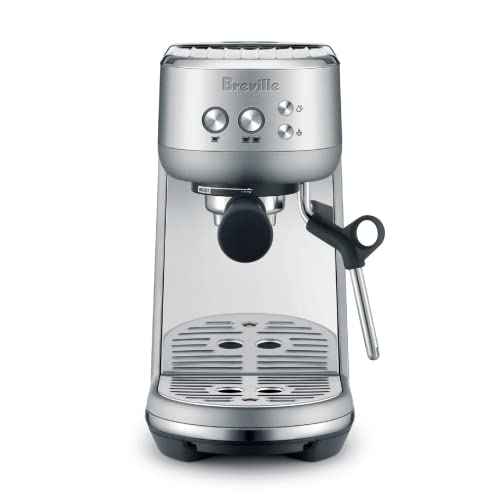
The default answer is the Breville Bambino (around $299.95 list, often $250-300 street). It is the cheapest route to genuinely good espresso that does not compromise the shot: near-instant heat-up, steam that punches above its price, and the smallest footprint here. It leaves the most money in your budget for the grinder this whole tier secretly depends on.
For milk drinks and hands-off ease, the Bambino Plus (around $499.95 list, frequently $399-450 on sale) adds automatic milk texturing: it steams the pitcher for you and stops itself. The right pick for a latte household where a non-hobbyist also makes drinks.
To actually learn espresso, the Gaggia Classic Evo Pro (around $449-499) gives you a commercial 58mm portafilter, real repairability, and a modding ceiling the Brevilles cannot touch, in exchange for a steeper curve.
With no electricity at all, a Flair lever (roughly $100-475 depending on model) makes cafe-grade shots by hand, for people who want the ritual and the portability.
The honest asterisk on all four: none of them include a grinder, and the one true all-in-one with a built-in grinder, the De'Longhi La Specialista Arte, lists just over this line. Budget $100-250 for grinding; the under-$200 grinder roundup is the companion to this page.
Method note, stated plainly: BrewTested has not yet bench-tested these machines. This roundup synthesizes manufacturer specifications, owner reports across r/espresso and Home-Barista, and community references like the Espresso Aficionados wiki. Standards we are building toward: how we test.
What 'under $500' really buys in espresso
The single most important fact about this price tier is one no product page tells you: a good espresso machine under $500 is only half a setup. Espresso lives and dies on grind consistency and fine adjustment, and the machines that fit this budget with the shot quality to justify buying, the Bambino, the Bambino Plus, the Gaggia Classic Evo Pro, and manual levers, all leave the grinder out of the box.
That has a direct dollar consequence. The community's standing doctrine, repeated for years across Reddit and Home-Barista, is that on a budget the grinder matters as much as the machine, and a blade grinder or a cheap department-store burr grinder cannot grind fine or consistently enough for real espresso. So the real question this page answers is not 'which $400 machine' but 'which $400 machine, knowing you will spend another $100-250 on grinding.' We sequence that decision in grinder first or machine first, and the grinder shortlist itself is in our under-$200 grinder roundup.
The honest alternative, a one-box machine with a grinder built in for under $500, barely exists in a form we would recommend. The De'Longhi La Specialista Arte is the real version of that machine, but it lists above this line (more on it below), and the sub-$200 all-in-ones that do fit the budget lean on pressurized baskets that fake crema and largely ignore grind quality. So this list is deliberately machine-only, and it treats the grinder as a line item you have already accepted. Every pick here is a machine you buy because the grinder is worth its own budget.
The under-$500 field, compared
| Machine | Type | Portafilter | Milk / steam | Grinder included? | Price band (mid-2026) |
|---|---|---|---|---|---|
| Breville Bambino | ThermoJet electric, single-boiler-style | 54mm | Manual wand, instant switchover | No | ~$299.95 list, $250-300 street |
| Breville Bambino Plus | ThermoJet electric, single-boiler-style | 54mm | Automatic texturing (or manual) | No | ~$499.95 list, $399-450 on sale |
| Gaggia Classic Evo Pro | Single boiler, commercial-style | 58mm commercial | Commercial wand, boiler switchover | No | ~$449-499 |
| Flair 58 / Classic (manual lever) | Hand-lever press, no pump | 58mm (58) / 40mm (Classic) | None; pair with a milk frother | No | ~$100-475 by model |
Breville Bambino: the value default
The Breville Bambino (BES450) is the machine we would hand most first-time buyers, for one reason: it delivers the same espresso quality as machines costing more, then gets out of the way. It is built around Breville's ThermoJet thermoblock, which flash-heats water on demand instead of holding a hot tank, so Breville advertises a roughly 3 second heat-up and the transition from pulling a shot to steaming milk is near instant. You get a 54mm portafilter, programmed shot buttons, and a manual steam wand.
Why the community keeps defaulting to it:
- It is cheap where it counts. At around $299.95 list, and often $250-300 on sale, it is the lowest-cost entry on this page, which matters precisely because it frees budget for the grinder
- The steam over-delivers. Owner consensus consistently rates Bambino steam as strong for the price, and in Bambino-versus-everything threads the recurring advice for milk-drink people who do not want to spend up is to lean Breville
- It disappears into a small kitchen. Under 8 inches wide and shorter than a kettle, it is the only machine here that hides under cabinets, though remember a separate grinder claims its own counter space beside it
The honest limits: no grinder, a plastic-forward build that feels like the appliance it is, and manual milk steaming you have to learn. None of that changes the verdict. If you want the shortest, cheapest path from box to real espresso and you accept adding a grinder, this is the pick. The full three-way case against its pricier siblings is in our Bambino vs Gaggia Classic Pro vs Barista Express comparison.
Breville Bambino Plus: the hands-off milk pick
The Bambino Plus (BES500) is the same brewing core as the standard Bambino with one transformative addition: automatic milk texturing. A temperature probe in the drip tray reads the pitcher, you pick a temperature and foam level, and the machine steams and stops itself, then purges the wand afterward. Manual steaming stays available when you want to practice latte art.
That single feature is the entire reason to spend up, and for the right household it is worth every dollar. In a home where a partner, a roommate, or a not-yet-obsessed you also makes drinks, the second-best latte in the house stops depending on the hobbyist being awake. It lists around $499.95 but has been widely discounted into the $399-450 band, which frequently makes the real-world gap over the base Bambino smaller than the sticker suggests.
The limits mirror the Bambino's: no grinder, and a brewing core that is excellent but not better than its cheaper sibling, you are paying purely for the auto-steam convenience. If you drink mostly straight espresso or americanos, that convenience is wasted and the plain Bambino is the smarter buy; the milk-versus-manual math is broken down in our Bambino vs Bambino Plus comparison. If you drink lattes daily, this is the most beginner-friendly machine on the page.
Gaggia Classic Evo Pro: the machine you learn on
The Gaggia Classic Evo Pro is the odd one out here, and deliberately so. It is the current evolution of a design that has existed in recognizable form since the early 1990s: a small single boiler, a commercial-style 58mm portafilter (the same size professional machines use), rocker switches, a three-way solenoid valve that depressurizes the group for a clean, dry puck, and a commercial-style steam wand. It is made in Italy from parts you can actually buy and replace. Recent E24 revisions ship with the over-pressure valve tuned near the 9 bar espresso standard from the factory, a change owners had long made themselves.
What you are buying at around $449-499 is not convenience, it is a relationship with the machine:
- A 58mm commercial portafilter gives you more room to dial in your grind and reduces channeling, and it means your accessories match the professional standard rather than Breville's 54mm
- Real repairability. The internals are simple, documented, and standardized, with an enormous aftermarket. People rebuild 20-year-old Classics for fun; Brevilles, when something major fails out of warranty, tend to get replaced rather than repaired
- The highest ceiling on this page. A cheap OPV spring tweak and a PID controller turn it into a genuinely serious machine, a ladder we walk in the Gaggia Classic Pro mods guide
The honest limits are real. Without a PID from the factory, brew temperature is managed by feel (owners call it temperature surfing), the single boiler makes back-to-back milk drinks its weakest event because it must climb to steam temperature and cool back down, and the stock experience is the roughest here. If reading the mods list made you tired, buy a Breville. If it made you open a new tab, this is your machine.
Flair lever: real espresso, no electricity
The wildcard on this list plugs into nothing. A Flair manual lever press generates espresso pressure with your arm instead of a pump, and the results genuinely reach cafe-grade because you control the pressure profile by hand. It is a different way to make espresso, and for the right person it is the most rewarding one under $500.
The lineup spans the budget, so match the model to your commitment:
- Flair Neo Flex, around $100, is the softest entry: pressurized-style basket, forgiving, a real introduction to lever espresso for pocket change
- Flair Classic, around $165, steps up the components and unpressurized brewing for people ready to dial in properly
- Flair 58, roughly $375-475 by version, is the aspirational pick: a full 58mm commercial portafilter, a large brew chamber, and an optional electric heating element, near the top of this budget but a machine serious lever fans keep for years
- The Cafelat Robot, around $225, is the other manual worth naming: no gauge on the base model, near-indestructible, a cult favorite
The trade-offs are inherent to the format. There is no built-in steam wand, so milk drinks need a separate frother or steamer, you heat your water with a kettle unless you buy the heated 58, and grind quality matters even more than usual because there is no pump to paper over a bad grind, so a manual lever arguably deserves the best grinder your budget allows. Buy a Flair if the hands-on ritual sounds like the point rather than a chore, or if you want espresso that travels. Skip it if you want to press a button on a busy morning.
The all-in-ones that just miss the line
Two machines come up constantly in under-$500 searches and both sit just outside it, so here they are, honestly placed.
De'Longhi La Specialista Arte (EC9155). This is the real one-box answer: a semi-automatic with an integrated conical burr grinder, a dosing-and-tamping station, non-pressurized baskets included, and a manual steam wand. If a built-in grinder under one roof is your priority, it is the machine to want. The catch is price: it lists around $699.95, and while it dips toward the $500 mark during sale events, calling it an under-$500 machine at its normal price would be dishonest. Watch the deals, and if it lands near $500 with the grinder included, it changes the math on this whole page.
Breville Barista Express. The best-selling all-in-one in North America, also with a built-in grinder, but it sells at roughly $549-600 street, over this line, and its integrated grinder is the component owner consensus says you outgrow first and cannot upgrade. We cover it in depth in our Barista Express review and weigh it against a Bambino-plus-grinder setup in Barista Express vs Bambino Plus + DF54.
What to skip. The sub-$200 all-in-ones that technically fit this budget (the Casabrews, Gevi, and lookalike tier) lean on pressurized dual-wall baskets that generate crema-like foam through a valve and mostly ignore grind quality. They make coffee, but they cap your espresso quality permanently and waste any real grinder you pair with them. If a true one-box machine under $500 is a hard requirement, the honest guidance is to wait for a La Specialista Arte sale rather than buy down into the pressurized-basket tier.
The budget revolt: readers arguing you need less than this page
A theme kept recurring across r/espresso this summer, and it deserves a straight answer rather than a shrug: several owners argued the standard recommendations on pages like this one are overkill. One buyer named the fear exactly: that machines like these are 'for varsity players, not JV ones.' Another skipped the Bambino entirely for a budget setup built around the Gemilai Owl and a cheap burr grinder, and told the sub it performed like a machine twice the price. A third skipped new hardware altogether and fixed their De'Longhi's fake-crema problem with a roughly $20 unpressurized basket swap instead of replacing the machine.
Here is our honest read of each.
The Gemilai Owl (G3006) is a real data point, reported rather than recommended. The current version lists a 58mm commercial-style group head and PID temperature display (specs this page's own enthusiast pick charges $450 for) at a listed price that has been sitting well under $300. The same owner's caveat matters just as much: out of the box it needed 'a proper OPV' (over-pressure valve) adjustment before it pulled balanced shots. That is the Gaggia tuning story without the Gaggia's twenty-year parts aftermarket, documented internals, or established US support, which is a real part of what the extra money on this page buys. We have not tested one, so it stays out of the picks; if you buy one, you are the early adopter, and you should budget the temperament for it.
The $20 basket swap is the genuinely underrated move. If you already own a pressurized-basket machine (a Casabrews, a Gevi, an entry De'Longhi) swapping in an unpressurized basket and upgrading the grinder converts it into a real espresso trainer for less than the cost of shipping a new machine. It will not add temperature stability or steam power, but it removes the quality cap those baskets impose, and it is the cheapest possible way to find out whether you care about this hobby before spending $300+.
And the 'varsity players' fear has a short answer: espresso gates on three things, none of which is a brand. An unpressurized basket, a grinder that can adjust finely enough, and stable-enough water temperature. Any machine that clears those three can make excellent espresso in practiced hands, what the machines on this page add is consistency, steam speed, repairability and support, not admission to the club. A $200 machine with a $150 grinder and a month of practice will beat a $500 machine paired with a blade grinder every time. If the budget conversation is really a 'how much do I split where' conversation, our budget-split guide walks the $300, $500 and $1,000 versions of it.
Transparency: BrewTested has not yet run these machines on our own bench, and this page will be updated as our ownership logs come online (the first is a Barista Express log, already scaffolded). Everything above is sourced from manufacturer specifications (Breville, Gaggia, De'Longhi, Flair), sustained owner reporting on r/espresso and Home-Barista, and community references like the Espresso Aficionados wiki. Prices are hedged as of mid-2026 and sale bands reflect recent deal history, not guarantees. As an Amazon Associate, BrewTested earns from qualifying purchases.
Pick this if: the verdicts
Pick the Breville Bambino (~$299.95) if you want the lowest total cost of entry that does not compromise the espresso, you are fine adding a $150-200 grinder, and you value speed, strong steam, and a small footprint. Our overall pick, and the price-to-shot benchmark this tier gets measured against.
Pick the Bambino Plus (~$499.95, often less) if your household drinks lattes daily or someone else needs drinks to be push-button easy. Automatic milk texturing is the whole upgrade, and for milk-heavy homes it is the right one.
Pick the Gaggia Classic Evo Pro (~$449-499) if you suspect espresso is about to become your hobby rather than your appliance. Steeper curve and slower milk workflow, in exchange for a 58mm commercial portafilter, total repairability, and the highest ceiling on this page.
Pick a Flair lever ($100-475) if the hands-on ritual is the appeal, you want espresso with no electricity or that packs for travel, and you do not mind steaming milk separately.
Buy none of these yet if your grinder budget is zero. Waiting one more paycheck beats pairing a $400 machine with a $30 blade grinder; that pairing is the single most common regret in home espresso. And if your shots taste wrong once the gear arrives, the fault is usually dial-in, not hardware: start with our sour vs bitter guide.
Best espresso machine under $500: FAQ
What is the best espresso machine under $500?
For most buyers, the Breville Bambino (around $299.95 list) is the best value: it makes excellent espresso, heats in seconds, steams milk well, and leaves the most room in a $500 budget for the grinder every machine at this price needs. If milk drinks are a daily habit, the Bambino Plus adds automatic steaming; if you want to learn and tinker, the Gaggia Classic Evo Pro is the enthusiast pick.
Do espresso machines under $500 come with a grinder?
Almost never, and that is the tier's defining catch. The Bambino, Bambino Plus, Gaggia Classic Evo Pro, and manual Flair levers are all machine-only, so budget an extra $100-250 for a grinder. The one true all-in-one with a built-in grinder worth recommending, the De'Longhi La Specialista Arte, lists just above $500. The sub-$200 machines that do include a grinder rely on pressurized baskets that cap espresso quality.
Is the Breville Bambino or Bambino Plus better?
The brewing core is essentially identical, so it comes down to milk. The plain Bambino is cheaper and steams well manually; the Bambino Plus costs more (list around $499.95, often discounted) and adds automatic milk texturing that steams and stops for you. Straight-espresso drinkers should save with the base Bambino; latte-drinking or multi-person households usually find the Plus's auto-steam worth it.
Is the Gaggia Classic Evo Pro worth it for a beginner?
Yes, if the beginner wants to learn rather than push a button. At around $449-499 you get a commercial 58mm portafilter, a three-way solenoid, real repairability, and a huge modding ecosystem. The trade-off is a steeper curve: brew temperature is managed by feel without a PID mod, and its single boiler makes back-to-back milk drinks slow. Convenience-focused beginners are usually happier on a Bambino.
Can you make real espresso with a manual machine under $500?
Yes. Manual lever presses like the Flair 58, Flair Classic, and Cafelat Robot generate full espresso pressure by hand and reach cafe-grade shots, at prices from roughly $100 to $475. The trade-offs are no built-in steam wand (you froth milk separately), heating water with a kettle unless you buy a heated model, and an even greater dependence on a good grinder, since there is no pump to compensate for an inconsistent grind.
Is a $200 espresso machine good enough?
Sometimes, with caveats. Real espresso gates on an unpressurized basket, a capable grinder, and stable temperature, not on a badge. Budget machines that clear those three (owners currently point at the Gemilai Owl, which lists a 58mm group and PID well under $300) can pull excellent shots, though the one detailed owner report we track needed an over-pressure valve adjustment out of the box, and the budget brands lack the parts ecosystems and support the Breville and Gaggia premium partly pays for. The sub-$200 all-in-ones with pressurized dual-wall baskets remain the tier to skip.