Barista Express vs Bambino Plus + DF54: Same Money, Which Wins?
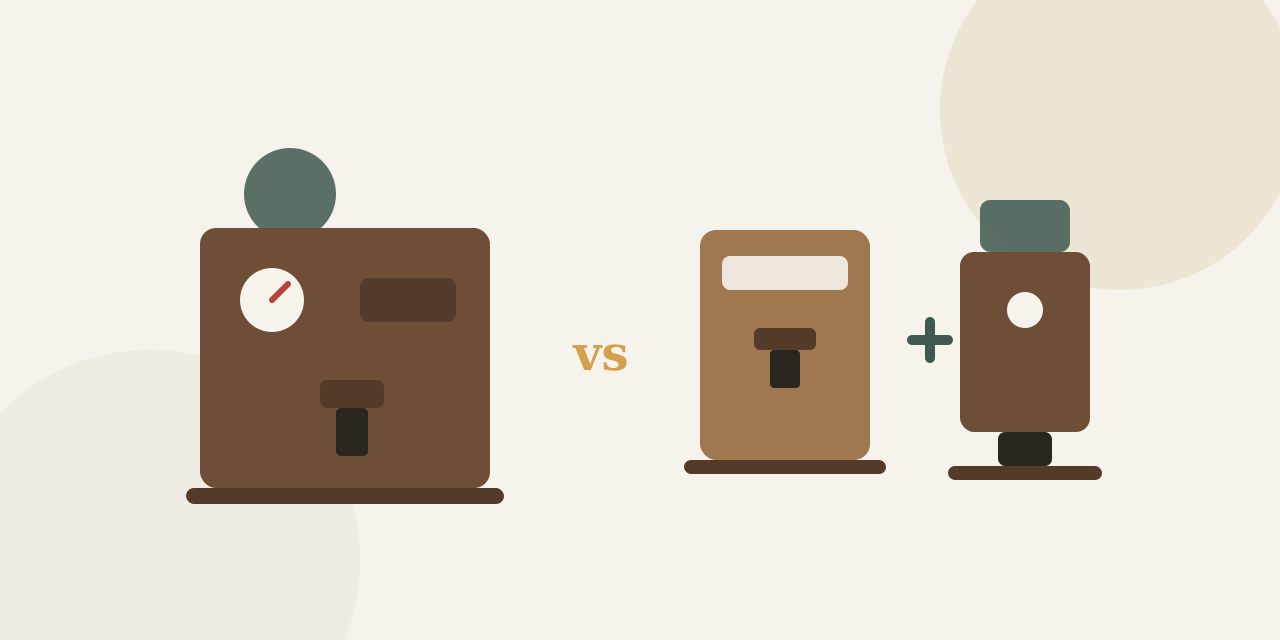
The all-in-one versus separates decision, run honestly at real street prices: one wide box with a built-in grinder against a small machine and a dedicated single-doser. The answer depends on which wall you would rather hit later.
Some links below are affiliate links. If you buy through them, BrewTested may earn a small commission at no extra cost to you. We only recommend gear that passes our Fit Analysis, and we publish the ones that don't.
Three real configurations compete for the same first-setup money as of mid-2026:
Breville Barista Express, about $549-600 street. One box, one decision, grinder included. The fastest path from unboxing to latte, with a built-in grinder that community consensus rates as the package's weak point and that cannot be upgraded.
Bambino Plus + Turin DF54, about $700-730 combined. Costs more up front, wins on grinder quality, auto milk steaming, and a future where every component can be upgraded or sold independently.
Bambino + DF54, about $530-550 combined. The sleeper: Barista Express money, meaningfully better grinder, manual milk only.
Our read of the evidence: separates win for anyone who suspects espresso might become a hobby, and the plain Bambino + DF54 is the best value of the three. The Barista Express wins for buyers who want an appliance, not a project, and will genuinely never tinker.
BrewTested has not bench-tested these units ourselves yet; this comparison synthesizes manufacturer specs, owner reports, and community consensus, per how we test.

The decision this page actually resolves
Our three-machine comparison ends on a tension it cannot resolve alone: once you add a real grinder to the Bambino's price, you land at Barista Express money, so which way should the dollars go? This page runs that exact matchup.
The philosophical difference is simple. The Barista Express bets that integration is worth compromise: grinder, machine, and accessories engineered into one purchase and one footprint. Separates bet that the grinder is too important to bundle: the community's grinder-first doctrine holds that grind quality dominates espresso quality, so it deserves its own budget line and its own upgrade path.
The components, briefly. The Barista Express (BES870XL, in production since 2013) is a thermocoil machine with PID temperature control, a pressure gauge, a manual steam wand, and an integrated conical burr grinder with 16 settings. The Bambino Plus is a compact ThermoJet machine with near-instant heat-up and automatic milk texturing; the plain Bambino is the same brewing core with a manual wand and a lower price. The Turin DF54 is a 54mm flat-burr single-dose grinder with anti-static treatment, covered in depth in our under-$200 grinder roundup.
Prices, hedged as of mid-2026: Barista Express lists at $699.95 but reliably sells at $549-600 street. Bambino Plus lists at $499.95. Bambino lists at $299.95. DF54 lists around $249 and frequently sells at $199-230.
The three paths at real street prices (mid-2026, USD)
| Factor | Barista Express | Bambino Plus + DF54 | Bambino + DF54 |
|---|---|---|---|
| Realistic all-in cost | $549-600 | $700-730 | $530-550 |
| Grinder | Integrated conical, 16 settings, non-upgradeable | 54mm flat single-doser, stepless-style dial | 54mm flat single-doser, stepless-style dial |
| Heat-up | Roughly 30 seconds (thermocoil) | About 3 seconds published (ThermoJet) | About 3 seconds published (ThermoJet) |
| Milk | Manual wand, switchover pause | Automatic texturing with temp probe, or manual | Manual wand, fast steam |
| Counter footprint | One box, about 12.5 in wide plus top clearance | Two units, each under 8 in wide | Two units, each under 8 in wide |
| Upgrade path | None for the grinder; sell whole unit | Swap either component independently | Swap either component independently |
| Built-in learning aids | Pressure gauge, PID | None beyond programmed shots | None beyond programmed shots |
Shot ceiling: where separates win outright
The espresso itself is the least symmetrical part of this comparison, and it comes down to the grinders, not the machines.
The brewing cores are closer than the price gap suggests: both the Barista Express and the Bambinos are 54mm Breville platforms targeting 9 bar with temperature control (PID thermocoil in the Express, ThermoJet in the Bambinos), and community consensus does not treat either brew path as a bottleneck at this level.
The grinders are not close. The Barista Express's integrated grinder is the most consistently criticized element of the package across owner threads and community references: workable, especially with medium and dark roasts, but less consistent than standalone grinders at its implied price, prone to clogging with oily beans, and the component owners report outgrowing first. Our Barista Express review documents that pattern in detail.
The DF54 brings 54mm flat burrs, single-dose workflow with minimal stated retention, and a continuous adjustment dial. In practical terms, owners report faster and more repeatable dialing (each adjustment shows up in the next dose), better day-to-day shot consistency, and more headroom with lighter roasts.
One honest counterweight: the Barista Express ships with a pressure gauge and its dose-control workflow, which genuinely help a first-week beginner understand what is happening. The separates path teaches through a scale and taste instead, with guides like our sour vs bitter diagnosis filling the feedback gap. Learning aids favor the Express early; the shot ceiling favors separates permanently.
Milk workflow: the Bambino Plus earns its premium here
Bambino Plus: automatic milk texturing is the headline. A temperature probe in the drip tray reads the pitcher, you select temperature and foam level, and the machine steams and stops itself, then purges the wand after. For households where a non-hobbyist also makes drinks, this is the killer feature in the entire comparison: the second-best latte in the house stops depending on the hobbyist being awake. Manual steaming remains available when you want to practice latte art, and ThermoJet means no meaningful wait between shot and steam.
Barista Express: a capable manual wand with a switchover pause while the thermocoil climbs to steam duty. Owner consensus rates it adequate but unhurried: fine for one or two drinks, tedious for a queue. Steaming skill is entirely on you, and the wand demands the same purge-and-wipe hygiene as any manual wand (our steam wand troubleshooting guide exists because so many owners skip it).
Plain Bambino: manual only, but with the ThermoJet's instant transitions and steam pressure that owner reports consistently describe as strong for the price. You learn to texture milk yourself, which many owners come to prefer.
Verdict for milk-heavy households: Bambino Plus + DF54, clearly, and it is the main justification for that path's higher price. For straight-espresso and americano drinkers, the milk column should barely influence the decision, which strengthens the plain Bambino + DF54 case.
Counter footprint: one wide box or two small ones
The Barista Express is a single silhouette about 12.5 inches wide and 15.9 inches tall per Breville's published dimensions, and it wants clearance above for the bean hopper and water tank. One power outlet, one visual object, and nothing else to buy or place.
The separates path puts two objects on the counter: a Bambino under 8 inches wide and a DF54 tower next to it. Total width lands in the same neighborhood as the Express, sometimes slightly more with breathing room between units, but the pieces are individually small and can be split: grinder near the beans, machine near the cups, or the grinder on a shelf entirely.
Call the footprint a functional tie decided by your kitchen's shape: one wide continuous slot favors the Express, flexible or awkward spaces favor separates. The real estate difference is smaller than most buyers expect because the Express's integrated grinder does not make it small, it makes it wide.
Upgrade path and resale: the welded-grinder wall
This is where the comparison stops being close.
The Barista Express has a wall in it. The grinder is the component community consensus says you outgrow first, and it is physically welded to your purchase: there is no grinder-only upgrade. When you hit the wall, the realistic options are adding a standalone grinder anyway (rational, common, and slightly absurd: a grinder sitting next to a machine with a grinder in it) or selling the whole unit and starting over. The one mitigating grace: Barista Expresses hold resale value unusually well because demand never stops, so the exit is real, just wholesale.
Separates have no wall. Every future in the hobby is an incremental swap: a bigger flat-burr grinder while the Bambino stays; a Gaggia, Profitec, or dual boiler while the DF54 stays; sell either piece separately into liquid used markets. The grinder-first doctrine pays out here a second time, because a good standalone grinder outlives multiple machines.
Maintenance follows the same logic. With separates, a machine problem and a grinder problem are independent, small events. With the all-in-one, every fault lives in one chassis, and the failure patterns owners actually report (steam wand blockages, group gaskets, grinder jams, descale-related faults) are cataloged in our Barista Express problems guide. Routine care like descaling on schedule applies to every path equally; the difference is the blast radius when something real breaks.
Learning curve: honest in both directions
The Barista Express is the gentler first week. The gauge tells you visually whether to grind finer or coarser, dosing is semi-guided, and the single manual covers everything. It was designed as a first machine, and it shows: an enormous share of today's enthusiasts started on one.
The separates path asks slightly more of week one: you will buy a scale (non-negotiable), learn to dose by weight, and adjust a stepless-style dial by feel and shot time rather than by numbered gauge. It is not hard, but it is two manuals and a few more variables on day one.
By month two the curves cross. The DF54's single-dose feedback loop (change one thing, see it in the next shot) teaches faster than the Express's hopper-and-gauge loop, and separates owners tend to come out the other side with more transferable skill. Buyers who want the shallowest possible entry ramp should weigh the Express; buyers who want the better month six should not.
Verdicts: pick this if
Pick the Barista Express ($549-600 street) if you want an appliance: one purchase, one box, guided learning, and a complete latte workflow today, and you can honestly say tinkering holds no appeal. Its resale strength also makes it a low-regret way to find out whether espresso sticks. Just buy it knowing exactly where the wall is.
Pick the Bambino Plus + DF54 ($700-730) if milk drinks are daily, more than one person makes them, and you want the best grinder and the best steam workflow in the comparison. It is the most money and the most complete setup on this page, and for a latte household planning to stay in the hobby, we think it is the best buy here.
Pick the Bambino + DF54 ($530-550) if you want the most espresso quality per dollar at Barista Express money. You give up auto-steam and the gauge, and you gain the better grinder and the open upgrade path. For a straight-espresso or flat-white drinker comfortable learning manual milk, this is the value verdict, and the setup we would build first.
A step further either way: if the Plus's auto-steam intrigues you but the price stings, the Bambino vs Bambino Plus decision is its own page. And if reading about mods and upgrade ladders excited rather than exhausted you, the machine you actually want might be a Gaggia; start with the three-machine comparison.
Transparency: BrewTested has not yet bench-tested these machines and grinders side by side; this comparison is built from manufacturer specifications, sustained owner reporting on r/espresso and Home-Barista, and community references, with the seams shown. Prices are street-vs-list as of mid-2026 and will drift; check current listings. As an Amazon Associate, BrewTested earns from qualifying purchases.
Barista Express vs Bambino Plus + DF54: FAQ
Is the Barista Express or a Bambino with a separate grinder better?
For pure espresso quality and future flexibility, the Bambino plus a DF54-class grinder wins: the standalone grinder outperforms the Express's integrated one, and either component can be upgraded or resold independently. The Barista Express wins on simplicity: one purchase, guided learning via its pressure gauge, and a complete kit in the box at $549-600 street as of mid-2026.
How much does a Bambino Plus and DF54 setup cost compared to a Barista Express?
As of mid-2026: Bambino Plus ($499.95 list) plus a DF54 (frequently $199-230 on sale) lands around $700-730, versus $549-600 street for the Barista Express. The closer matchup is the plain Bambino ($299.95) plus DF54 at roughly $530-550, which is Barista Express money with a meaningfully better grinder and no auto milk steaming.
Can you upgrade the grinder in a Breville Barista Express?
No. The grinder is integrated and there is no grinder-only upgrade path, which is the machine's defining limitation. Owners who outgrow it either add a standalone grinder next to the machine and stop using the built-in one, or sell the whole unit, which the Express's strong resale value fortunately makes practical.
Is the Bambino Plus worth it over the regular Bambino in this setup?
Only if milk drinks are a daily habit or someone non-hobbyist makes drinks too. The $200 list-price difference buys automatic milk texturing with a temperature probe and self-purging, not better espresso: the brewing core is essentially the same. Straight-espresso drinkers should keep the plain Bambino and put the savings toward beans and a scale.
Does the Barista Express make better espresso than the Bambino?
Fed identical grounds, community consensus treats their brew paths as comparable: both are 54mm Breville platforms with temperature control targeting 9 bar. In practice the Bambino paired with a better standalone grinder usually produces more consistent shots, because the grinder, not the machine, is the limiting component in the Barista Express package.