The $1,200–$2,000 Espresso Tier: Where the Money Should Actually Go
Above the all-in-ones and below the prosumer flagships sits the tier where buyers stall for weeks, heat-exchanger machine or flagship grinder, E61 group or fast heat-up, Amazon or a specialist retailer. A map of the tier, and the one question that sorts it.
Some links below are affiliate links. If you buy through them, BrewTested may earn a small commission at no extra cost to you. We only recommend gear that passes our Fit Analysis, and we publish the ones that don't.
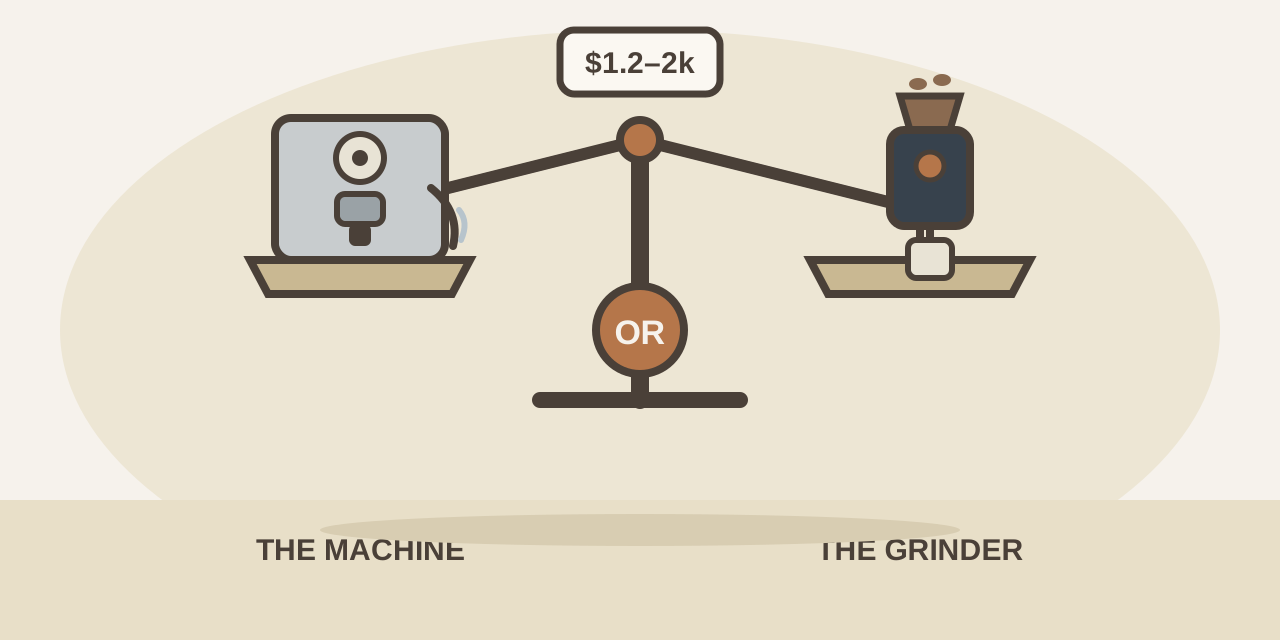
In this tier the deciding question is not which machine, it is machine or grinder. $1,200–$2,000 is exactly enough to do one of two things well: step up to a heat-exchanger or dual-circuit machine, or buy a flagship grinder that outlasts every machine you will ever own. It is not enough to do both at once, and buyers who try end up with two compromises.
- Milk drinks daily, more than one cup at a time → the machine is the bottleneck. A heat-exchanger (HX) machine: the Lelit MaraX and Profitec Go 2.0 are the pair one r/Coffee poster spent weeks deadlocked between, steams while it brews, which a Bambino-class or Gaggia single-boiler cannot.
- Straight espresso, light roasts, one or two cups → the grinder is the bottleneck, and this cycle's r/espresso feed is the proof: the celebrated arrivals were a Zerno Z2 after a 339-day wait and an Option-O Lagom Casa, grinders at prices people used to pay for machines.
- Channel honesty: most of this tier does not primarily sell on Amazon. HX machines and boutique grinders live at specialist retailers; we link Amazon where a listing genuinely exists and say plainly where it does not. The budget-split doctrine still governs, this page is its $1,200–$2,000 chapter.
What this tier actually buys, machine-side
Below this tier, every machine: Bambino, Gaggia Classic, Barista Express, shares one architecture: a single small heater that either brews or steams, never both. The workflow tax is real in milk-drink households: pull, wait, steam, and repeat the whole cycle per guest.
The $1,200–$2,000 machine tier removes that constraint with real boilers. A heat-exchanger (HX) machine runs one large steam boiler with a brew-water pipe running through it, you steam and brew simultaneously, and steam power is in a different class from anything thermocoil. The Lelit MaraX (usually around the bottom half of this tier) is the category's current favorite for a clever reason: its brew temperature is managed by sensors rather than the traditional HX cooling-flush ritual, making it the least fiddly E61-group machine to live with. The Profitec Go 2.0 takes the other route to the same money: a compact single-boiler-plus-PID with fast heat-up and famously tidy build quality, less steam capability than the MaraX, faster from cold, smaller on the counter. That is the actual shape of the deadlock the r/Coffee poster described after weeks of spec-sheet reading: it is a *lifestyle* fork (always-on HX for a household's milk drinks vs quick-heat precision for a solo drinker), not a quality ranking, which is why spec sheets could not resolve it.
Two honest tier-wide notes. First, E61 groups love being left on: an HX machine wants 20–35 minutes of warm-up, so it suits routines (or smart plugs), not spontaneity. Second, weight and space: these are 40–60 lb machines that live where you put them. Measure twice; they do not tuck under cabinets the way a Bambino does.
Channel reality: Lelit and Profitec sell primarily through specialist espresso retailers (Clive, Whole Latte Love, Seattle Coffee Gear and peers), where you also get real support and parts. Amazon listings for these machines come and go, often third-party. We would buy this tier from a specialist, and that is also where warranty service actually functions.
What this tier buys, grinder-side, and why the community keeps choosing it
The other way to spend the same money contradicts every showroom instinct: keep your current machine and put $800–$1,500 into a grinder. The community evidence this cycle is hard to ignore, the two purchases r/espresso actually celebrated were a Zerno Z2 that its owner waited 339 days to receive, and an Option-O Lagom Casa upgrade. Nobody waits eleven months for a status object they will replace; this is the tier where grinders become buy-once equipment.
The argument, compressed from grinder first or machine first: the grinder sets the ceiling on what any machine can extract, particle distribution matters more as roasts get lighter, and a flagship grinder survives every machine change you will ever make. The r/Coffee poster's own stated preferences (light, floral, acidic roasts, mostly straight espresso, two cups a day) describe, almost word for word, the buyer for whom the grinder is the correct spend and the HX machine is capacity they will not use. If that poster is reading: the deadlock is real because you are choosing between two machines when your profile points at neither.
Channel reality is starkest here: Zerno and Option-O sell direct from the maker, with waitlists standing in for inventory; there is no Amazon path and pretending otherwise would be a disservice. What Amazon does carry credibly in this bracket: the Eureka Mignon family and DF-series grinders around the tier's lower edge, see our under-$500 grinder guide for that territory. One durability note from this week's feed as a counterweight: an out-of-warranty Eureka Specialita was stranded by a stripped burr-carrier thread with no purchasable part number, at every price, parts policy is a spec, and it is worth one pre-purchase search per candidate.
The tier, mapped
| Path | Representative kit | Who it fits | Where to buy it |
|---|---|---|---|
| HX machine, keep your grinder | Lelit MaraX + your existing grinder | Milk drinks daily; guests; always-on routine; you already own a capable grinder | Specialist retailers (Clive, Whole Latte Love, etc.), Amazon listings are sporadic and often third-party |
| Compact quality machine | Profitec Go 2.0 | Solo drinker wanting fast heat-up and build quality over steam capacity | Specialist retailers |
| Flagship grinder, keep your machine | Zerno Z2 / Option-O Lagom Casa + your current machine | Straight espresso, light roasts, upgrade-proof buying, this cycle's community favorite | Direct from maker; expect waitlists. No Amazon path |
| Split the difference | Bambino Plus-class machine + mid-tier single-doser | Coming from a super-auto or capsule machine with the full budget in hand | Amazon covers this split: see the budget guide |
| Stretch to dual boiler | Add ~$300–500 and exit the tier upward | Only if milk volume is high AND temperature stability is a stated obsession | Specialist retailers; a different article |
The uncomfortable finding: reliability is not priced in
One more thread from this cycle belongs in a tier guide, precisely because it cuts against the price-equals-peace-of-mind instinct: a Fellow Espresso Series 1 (a design-forward machine at this tier's edge) died after two days and four shots with a boiler-fill error and unresponsive controls. A first-generation machine from any brand, at any price, carries first-generation risk, and a beautiful spec sheet does not amortize it.
The practical filters this suggests for the tier: prefer platforms that have been in production for years (the E61 ecosystem's parts commonality is a feature, not conservatism), check that the importer or retailer actually services what they sell, and search "[model] + error" before buying anything released in the last eighteen months. None of this shows up in comparison tables, and all of it matters more than the differences that do. BrewTested has not bench-tested reliability in this tier, these are owner reports, linked, weighted the way we would weight them spending our own money.
What Amazon credibly covers in this tier
Most of this tier sells through specialist retailers or direct from makers, and we have said so above rather than forcing links. What follows is the part of the map where Amazon is genuinely the right channel. ASINs verified via the Amazon Creators API this run; dimensions are Amazon product data; BrewTested has not bench-tested these. Prices move constantly, so we do not quote them.
 The split-path machine
Breville Bambino Plus (BES500)
The machine half of the split-budget route into this tier: full 9-bar espresso and auto milk in a listed 12.5 x 7.6 x 12.2 inch, 11 lb footprint, leaving $700–1,400 of the budget for the grinder that will outlive it. The reigning argument against buying any mid-tier machine at all.
Check price on Amazon The floor of serious
Baratza Encore ESP
Not a tier-topping grinder: the honest entry point that makes the split path work on day one, with 40 espresso-range settings and Baratza's genuinely excellent parts and repair policy (the counterexample to this page's stranded-Specialita story). Listed at 13.4 inches tall, 5.6 lb. Upgrade later without guilt.
Check price on Amazon The Amazon middle
Single-dose 64mm-class grinders
Between the Encore ESP and the direct-order flagships sits the DF-series and Eureka Mignon territory Amazon actually stocks, the working middle of the grinder-first path. Our under-$500 grinder guide ranks the specific models; check parts availability per our stranded-Specialita warning before choosing.
See options on AmazonBudget the accessories before the machine, not after: a scale you trust (our espresso scale guide has the picks), a real tamper and distribution tool if you leave the all-in-one world, filtered water or bottle-water recipe minerals, and (for any E61 machine) a smart plug so warm-up happens before you wake. That is $150–250 of the tier budget spoken for, and skipping it to afford a shinier machine inverts the priorities: it is the difference between owning this tier and just displaying it.
The $1,200–$2,000 tier: FAQ
MaraX or Profitec Go 2.0, just answer it.
Daily milk drinks or a multi-person household: MaraX, the simultaneous steam-and-brew and bigger steam reserve are the capabilities you are paying the tier for. Solo drinker, mostly straight shots, wants the machine hot in minutes rather than half an hour: Go 2.0. If your profile is light roasts and straight espresso two cups a day (the exact profile in the thread that prompted this page) our real answer is neither: put the money in the grinder.
Why do you keep steering machine budgets into grinders?
Because the grinder sets the ceiling and the machine only reaches it. A $1,800 machine fed by a $200 grinder produces $200-grinder espresso with excellent steam. The reverse pairing (modest machine, flagship grinder) tastes better in the cup, and the grinder survives every future machine change. The community's revealed preference this cycle (an 11-month Zerno waitlist, celebrated on arrival) is the same math, crowd-verified.
Is buying this tier on Amazon a bad idea?
For the specialist machines and boutique grinders, mostly yes, listings are intermittent, frequently third-party, and warranty service routes through importers who prefer their own retail channels. Amazon is the right channel for the split path (Breville, Baratza, DF-class grinders) where first-party listings and returns are solid. We link Amazon where that is true and name the specialist channel where it is not; forcing the wrong channel to earn a commission is how affiliate guides go bad.
Should I stretch past $2,000 to a dual boiler?
Only if you can name the specific limitation you are escaping, usually high milk volume plus a stated need for set-and-forget brew temperature. An HX machine covers most households' real usage, and the MaraX's sensor-managed brew temperature closes most of the traditional HX gap. Stretching to a dual boiler while keeping a mid-tier grinder is the tier's classic misallocation, it buys stability your grinder cannot express in the cup.
What about my current machine when the new grinder arrives?
Keep it running: that is the quiet advantage of the grinder-first path: zero downtime, and the improvement lands immediately through the machine you already know how to drive. Re-dial from scratch (start our sour-vs-bitter diagnostic over; the new grinder's settings do not map onto the old one's numbers), and expect a week of recalibration before judging anything.
Related reading
This page is the $1,200–$2,000 chapter of how to split your espresso budget, and the machine-or-grinder question gets its full treatment in grinder first or machine first. If you landed here from below, best espresso machines under $1,000 covers the tier this one graduates from, and best espresso grinder under $500 maps the grinder territory Amazon genuinely serves. Once the money is spent, the sour vs bitter diagnostic is where dialing in the new kit begins.